How a midterm tie gets settled in the case of the Senate
How a midterm tie gets settled in the case of the Senate
In the World Cup, they play overtime, then rely on penalty kicks to settle ties.
The National Hockey League plays a short overtime, followed by a shootout. NHL games used to end in ties. In the playoffs, the teams keep going – until theres a winner. In the 2020 playoffs, the Tampa Bay Lightning finally topped the Columbus Blue Jackets 3-2 after a staggering five overtimes. In other words. They played nearly THREE total games. Thats the equivalent of 26 innings in baseball.
Speaking of Major League Baseball, teams play extra innings. And keep playing until one team is ahead and the home team has completed an at-bat in the bottom of the inning. MLB modified its rules a few years ago, introducing a "ghost runner" on second base to start the 10th inning. Thats an effort to end the tie and finish the game sooner.
If only there were a method to settle a tie in the
Yes. In the case of a tie roll call vote, the vice president — who doubles as president of the Senate – can vote to break a tie vote. In fact, the VP doesnt even have to cast a ballot if its a tie and the roll call vote is going the way he or she wants. By rule, tie votes go down to defeat in the Senate.
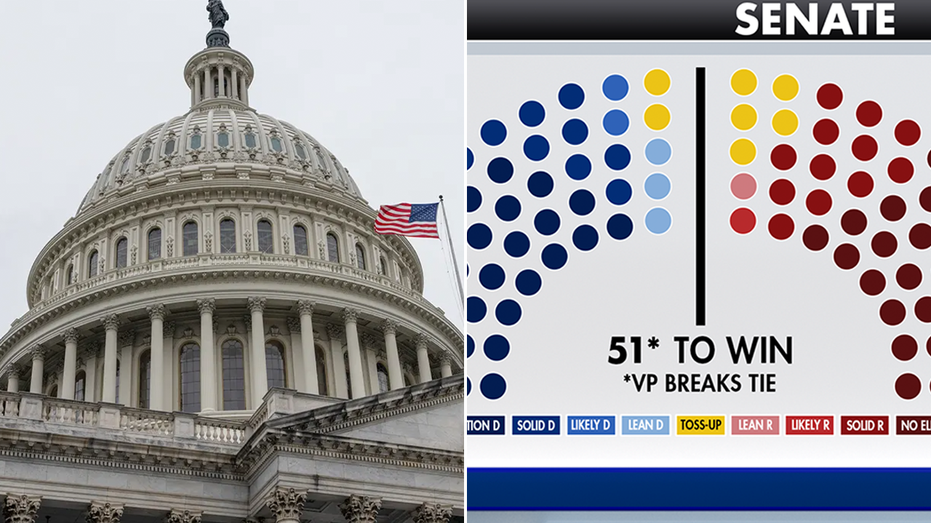
But what if we wake up Wednesday morning (if not Friday or Saturday morning or sometime in early December, depending on how hotly contested things are) to discover that the Senate is tied at 50-50?
There is nothing in the Senates 44 standing rules which serves as a tiebreaker. The Founders didnt provide a system to bust up a tie and determine which side is in the majority or minority. And no, its not written down anywhere that the party of the President is automatically thrust into the majority.
Maybe soccer is on to something with penalty kicks. At least theres a system. Theres nothing concrete to sort out which party controls the Senate if things are deadlocked at 50-50.
There was a tie was a Senate tie in 1881 after resignations and political maneuvering. The Senate was also tied for a period in 1954. Nearly ten percent of all senators died during the two-year Congress which stretched from early 1953 to early 1955.
However, the Senate featured two ties in recent Senate history. Both instances reflect what the Senate did to sort out which party captured the majority. One tie came after the 2000 election. The other in 2020. to sort things out.
were looking at you.
It took until early December, 2000 to determine that Sen. Maria Cantwell, D-Wash., defeated then-Sen. Slade Gorton, R-Wash., establishing a 50-50 Senate.
In fact, the tie for the Senate from the 2020 election wasnt even established until two days into the new Congress on January 6, 2021. Yes. That was the day of the Capitol riot. Sens. Jon Ossoff, D-Ga., and Raphael Warnock, D-Ga., both won runoffs to set the 50-50 split.
In early December, 2000, finally settled the Florida election dispute between President George W. Bush and Vice President Al Gore. Republicans had held the Senate. But then Senate Majority Leader Trent Lott, R-Miss., and Senate Minority Leader Tom Daschle, D-S.D., engineered a power-sharing agreement between the parties. This aligned with the election of Vice President Dick Cheney.
Lott would serve as the Majority Leader and the GOP technically had the "majority." But the bipartisan pact granted Daschle some special floor powers. each committee. However, there was equal representation by both parties on each panel.
The full Senate had to ratify this agreement. And it did just that.
Such a process is subject to two filibusters requiring 60 yeas. One to bring up the proposal for debate. Another to terminate the debate. Then a simple majority to pass it. But none of that was a problem. The Senate greenlighted it with all 100 senators signing on.
Why such smooth sailing?
Republicans feared Democrats would stall the agenda of President George W. Bush. So they got on board. Democrats agreed because






 22.3c